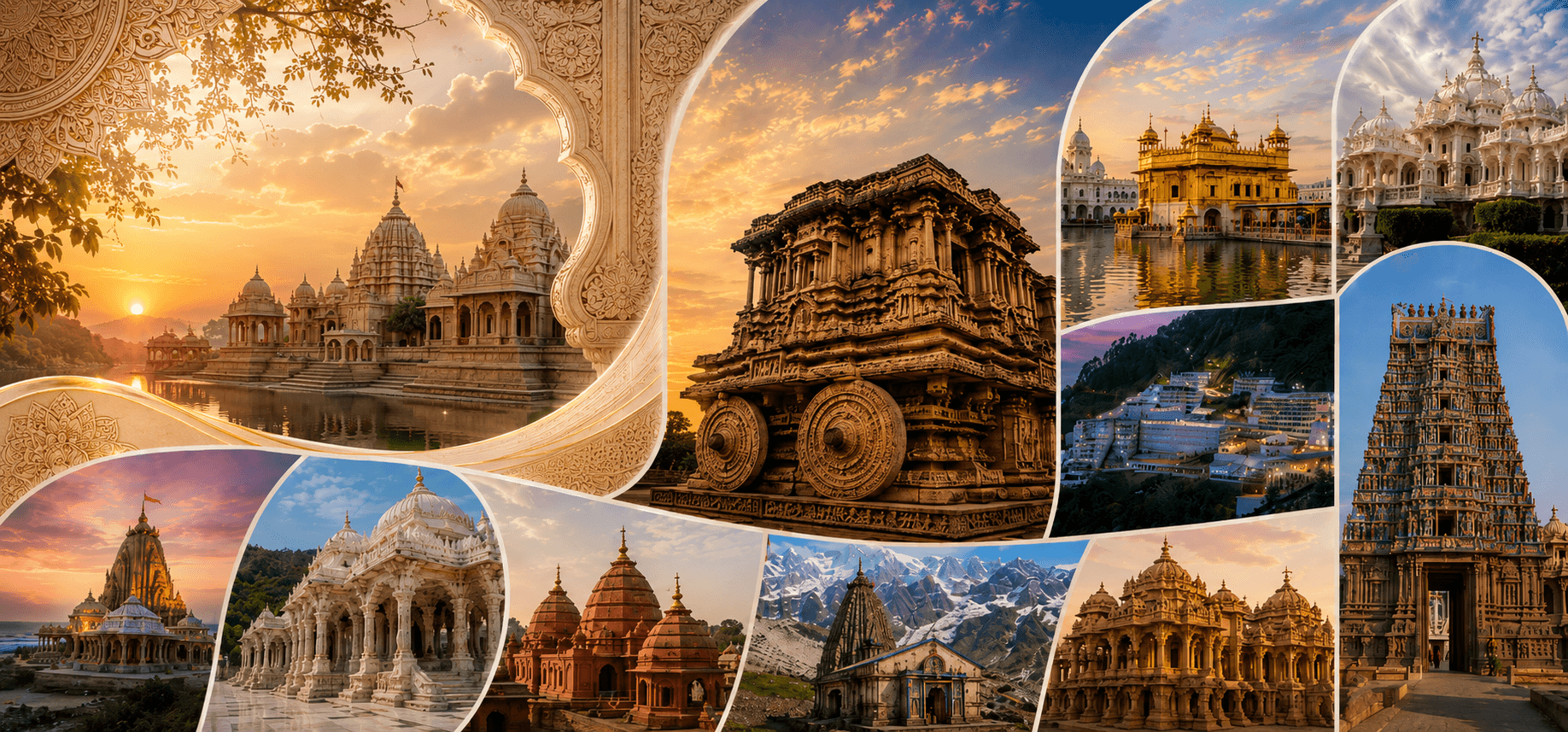
Introduction: A Journey Through India’s Most Beautiful Temples
Imagine standing outside a stone temple just before sunrise. The sky is still dark blue. A bell rings somewhere inside. The smell of flowers and incense floats in the cool air. Around you, people wait quietly with folded hands. Then the doors open, lamps light up the old carvings, and for a moment, time feels very slow and very peaceful.
This is what temple travel in India feels like. It is not only about religion. It is about art, history, food, festivals, and human stories that are hundreds or even thousands of years old. Some of the most beautiful temples in India stand high in the Himalayas. Others rise beside the sea, on riverbanks, or inside busy cities.
In this guide, we will walk through 15 beautiful temples in India. For each one, you will learn where it is, why it is special, a little of its history, the best time to visit, and one useful travel tip. Whether you are planning a family trip, a solo journey, or a school project, this article will help you.
Why Indian Temples Are So Special
Indian temples are living places. Many famous temples in India are more than a thousand years old, yet daily prayers still happen inside them, just as they did centuries ago. This mix of history and daily life is rare in the world.
Indian temple architecture is also very diverse. In the south, you will see tall gateway towers called gopurams, covered with colorful sculptures. In the north, temples often have curved stone towers called shikharas. In the east, temples like Konark are shaped like giant chariots. In the west, Jain temples are carved from pure white marble like lace.
Temples are also centers of culture. They host music, dance, festivals, and community kitchens. Around every big temple, you will find local markets, traditional food, and old streets full of stories. This is why temple tourism in India is loved by pilgrims, history students, photographers, and families alike.
15 Beautiful Temples in India You Must Know About
Here is our list of the best temples in India for beauty, history, and travel value.
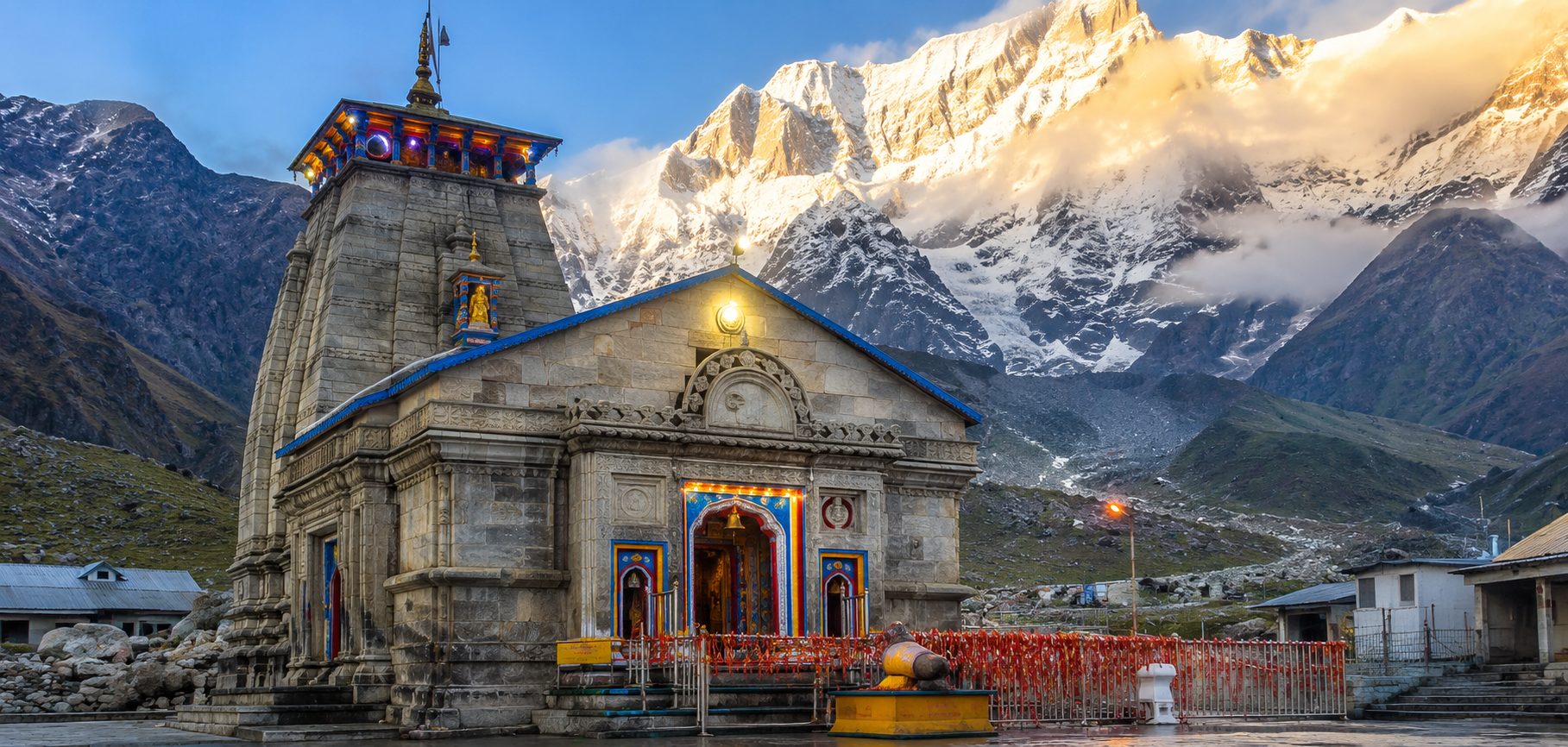
1. Kedarnath Temple
Location: Rudraprayag district, Uttarakhand
Main deity or importance: Lord Shiva; one of the twelve Jyotirlingas and part of the Char Dham of Uttarakhand
Why it is beautiful: Kedarnath stands at a height of about 3,580 meters, surrounded by snow-covered Himalayan peaks. The grey stone temple looks small against the giant mountains behind it, and that contrast is unforgettable. On clear mornings, the peaks glow golden while prayers echo in the cold air.
Main history: Local tradition connects the temple to the Pandavas of the Mahabharata, and the great teacher Adi Shankaracharya is believed to have revived it over a thousand years ago. The temple is built from heavy stone blocks and has survived centuries of harsh mountain weather, including the 2013 floods.
Best time to visit: May to June and September to October. The temple stays closed in winter due to heavy snow, usually from November to April.
Travel tip: The temple is reached by a trek of about 16–18 km from Gaurikund. Register for the Char Dham Yatra in advance, carry warm clothes even in summer, and check the official opening dates before you plan.
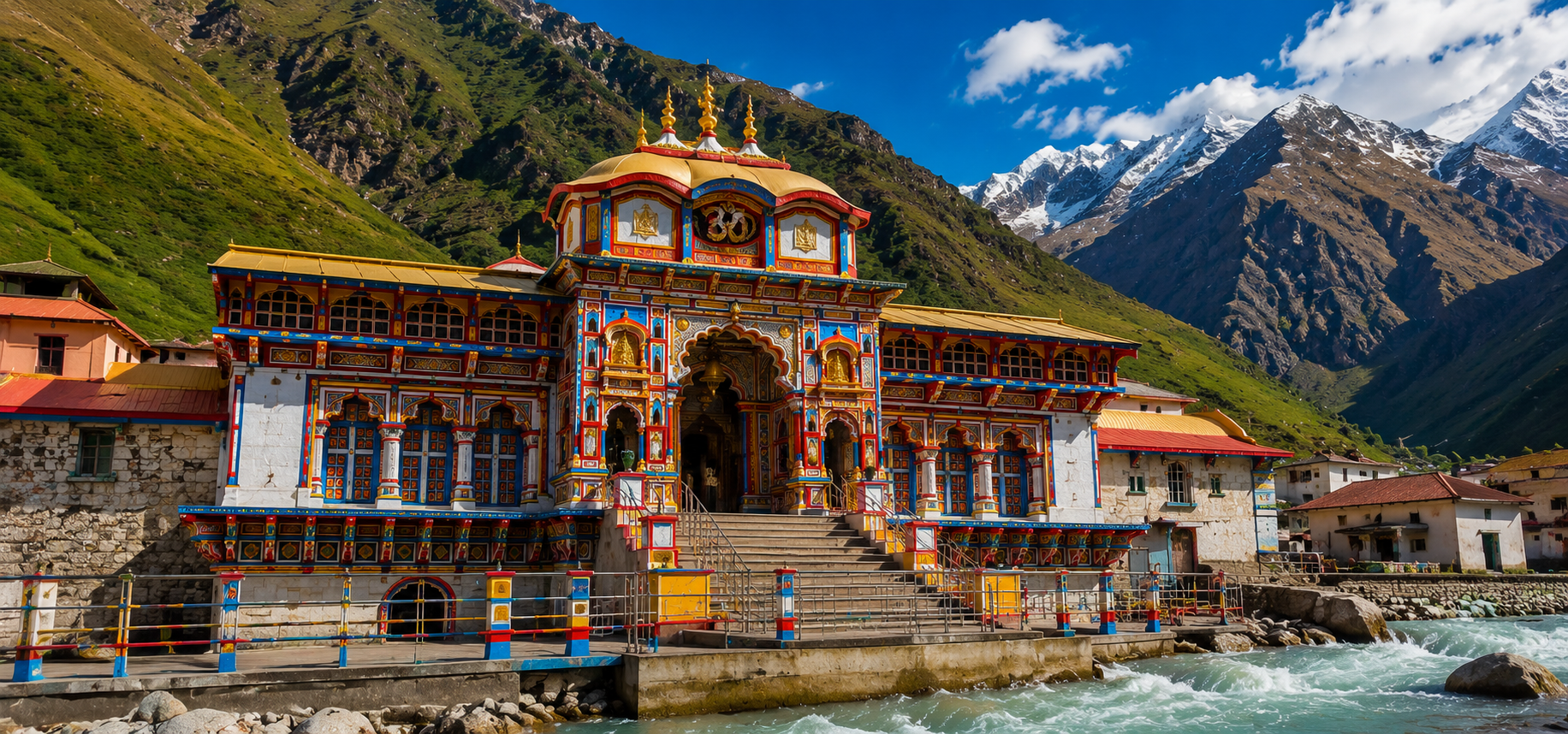
2. Badrinath Temple
Location: Chamoli district, Uttarakhand
Main deity or importance: Lord Vishnu as Badrinarayan; one of the Char Dham pilgrimage sites of India
Why it is beautiful: The temple has a bright, colorful front with a golden roof detail, set against the snowy Neelkanth peak. It stands beside the rushing Alaknanda river, and the mix of painted temple, white mountains, and blue river makes it one of the most photographed spiritual places in India.
Main history: The site has been a sacred place for many centuries and is linked in tradition to Adi Shankaracharya, who is said to have re-established the shrine. The present structure has been repaired and rebuilt several times because of earthquakes and avalanches in the region.
Best time to visit: May to June and September to early November. Like Kedarnath, it closes in winter.
Travel tip: Before entering, many pilgrims bathe in the Tapt Kund, a natural hot water spring near the temple. Roads in this region can close after heavy rain, so keep one buffer day in your plan.
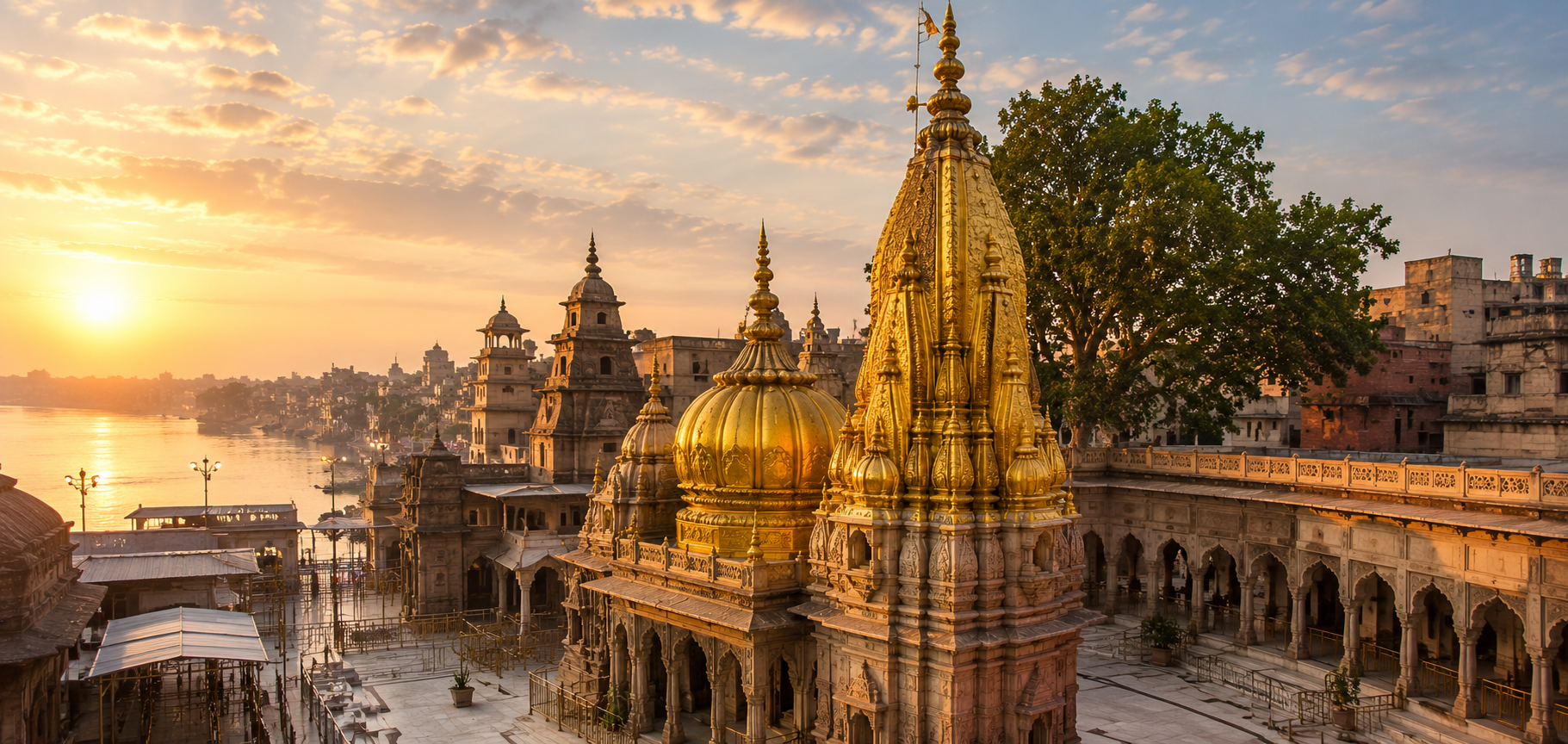
3. Kashi Vishwanath Temple
Location: Varanasi, Uttar Pradesh
Main deity or importance: Lord Shiva; one of the twelve Jyotirlingas and among the holiest spiritual places in India
Why it is beautiful: The temple’s golden spires shine above the old lanes of Varanasi, one of the world’s oldest living cities. The new Kashi Vishwanath corridor now connects the temple directly to the Ganga ghats, so pilgrims walk from the holy river to the shrine through wide, open courtyards.
Main history: The temple was destroyed and rebuilt several times over the centuries. The present main structure was built in 1780 by Queen Ahilyabai Holkar of Indore, and the gold covering on the spires was donated later by Maharaja Ranjit Singh of Punjab. The large corridor project was completed in 2021.
Best time to visit: October to March, when Varanasi’s weather is pleasant. Mahashivratri is very special but extremely crowded.
Travel tip: Combine your visit with the evening Ganga Aarti at Dashashwamedh Ghat. Mobile phones and large bags are usually not allowed inside the temple, so use the locker facilities.
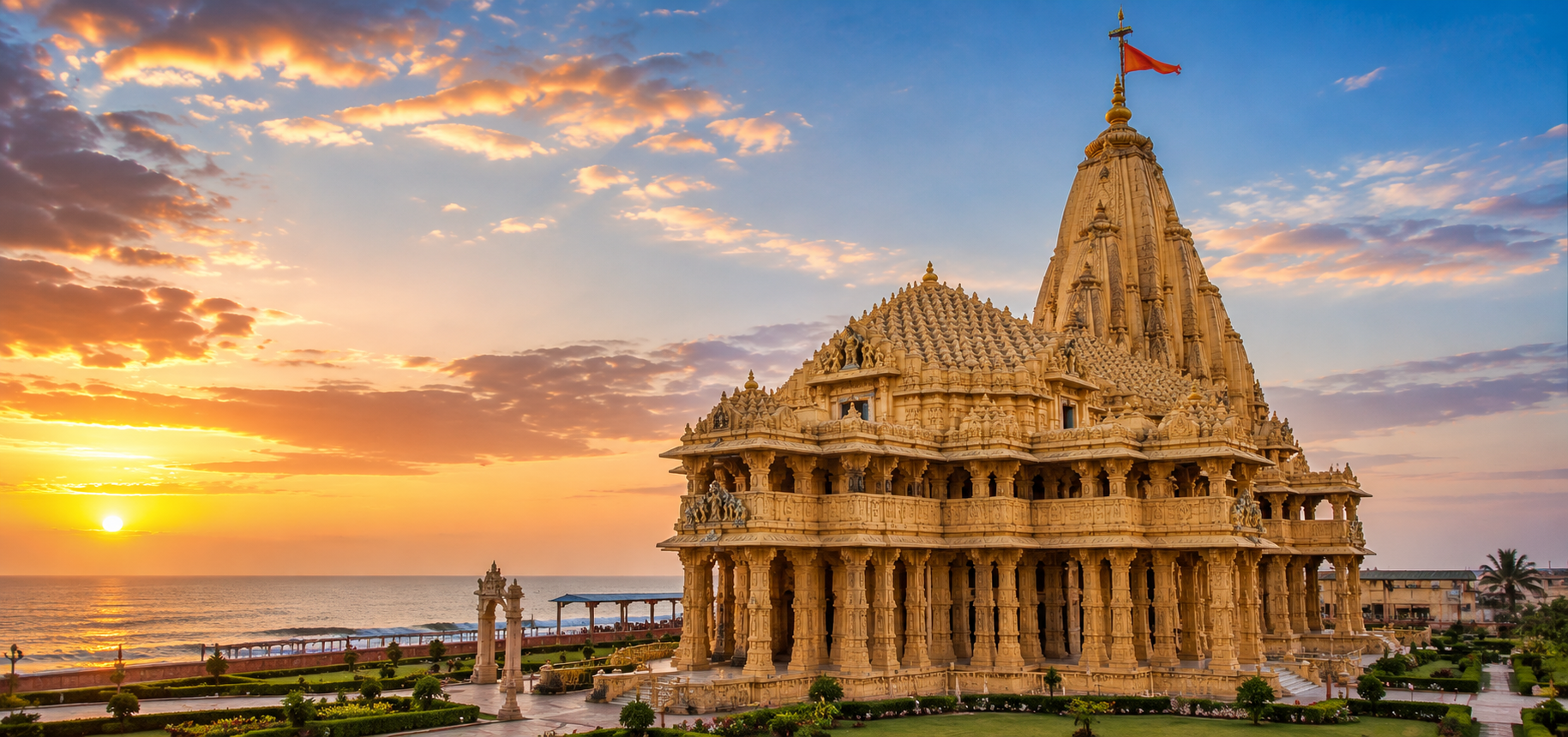
4. Somnath Temple
Location: Prabhas Patan, near Veraval, Gujarat
Main deity or importance: Lord Shiva; traditionally counted as the first of the twelve Jyotirlingas
Why it is beautiful: Somnath stands right on the shore of the Arabian Sea. The cream-colored stone temple against the endless blue water is a stunning sight, especially at sunset. The sound of waves mixes with temple bells, and the evening light-and-sound show tells its long story.
Main history: Somnath is famous as the temple that refused to die. It was attacked and destroyed many times in history and rebuilt each time. The present temple was completed in 1951, rebuilt with the support of Sardar Vallabhbhai Patel in the traditional Chalukya style of temple architecture.
Best time to visit: October to March, when the coastal weather is cool and comfortable.
Travel tip: Stay for the evening aarti and the light-and-sound show. Photography is restricted inside the main temple area, so follow the signboards carefully.
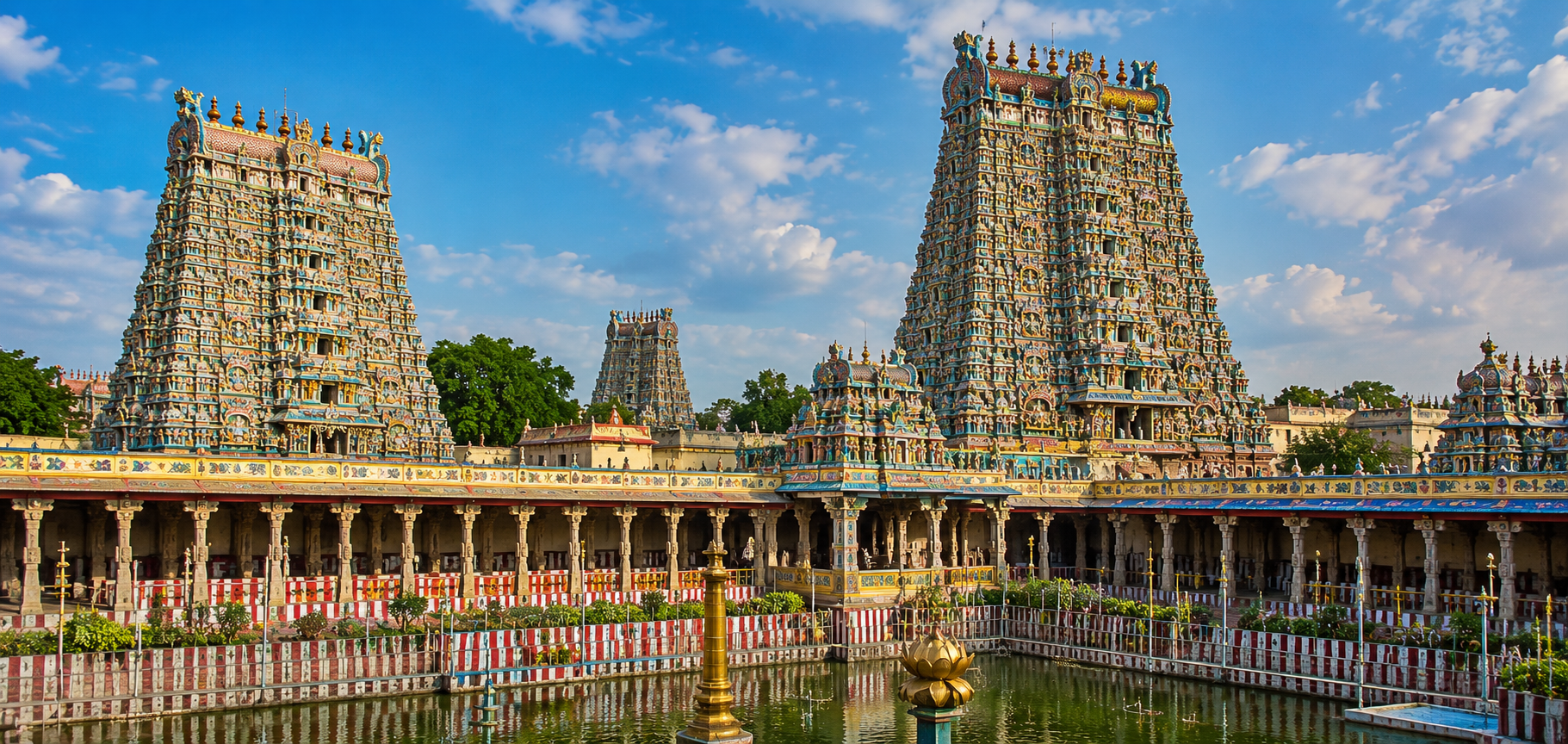
5. Meenakshi Amman Temple
Location: Madurai, Tamil Nadu
Main deity or importance: Goddess Meenakshi (a form of Parvati) and Lord Sundareswarar (Shiva)
Why it is beautiful: This temple is a city within a city. Its 14 towering gopurams are covered with thousands of brightly painted sculptures of gods, animals, and dancers. Inside, the Hall of Thousand Pillars and the sacred Golden Lotus tank show the finest side of Indian temple architecture.
Main history: Madurai and its temple are mentioned in ancient Tamil literature, so the site is thousands of years old. Most of the present structure was built and expanded in the 16th and 17th centuries under the Nayak rulers, especially Tirumalai Nayak.
Best time to visit: October to March for pleasant weather. The Chithirai festival (usually April–May) is grand but very crowded and hot.
Travel tip: Visit early morning to enjoy the carvings in soft light and smaller crowds. Dress modestly; dhotis and shawls are available near the temple if needed.
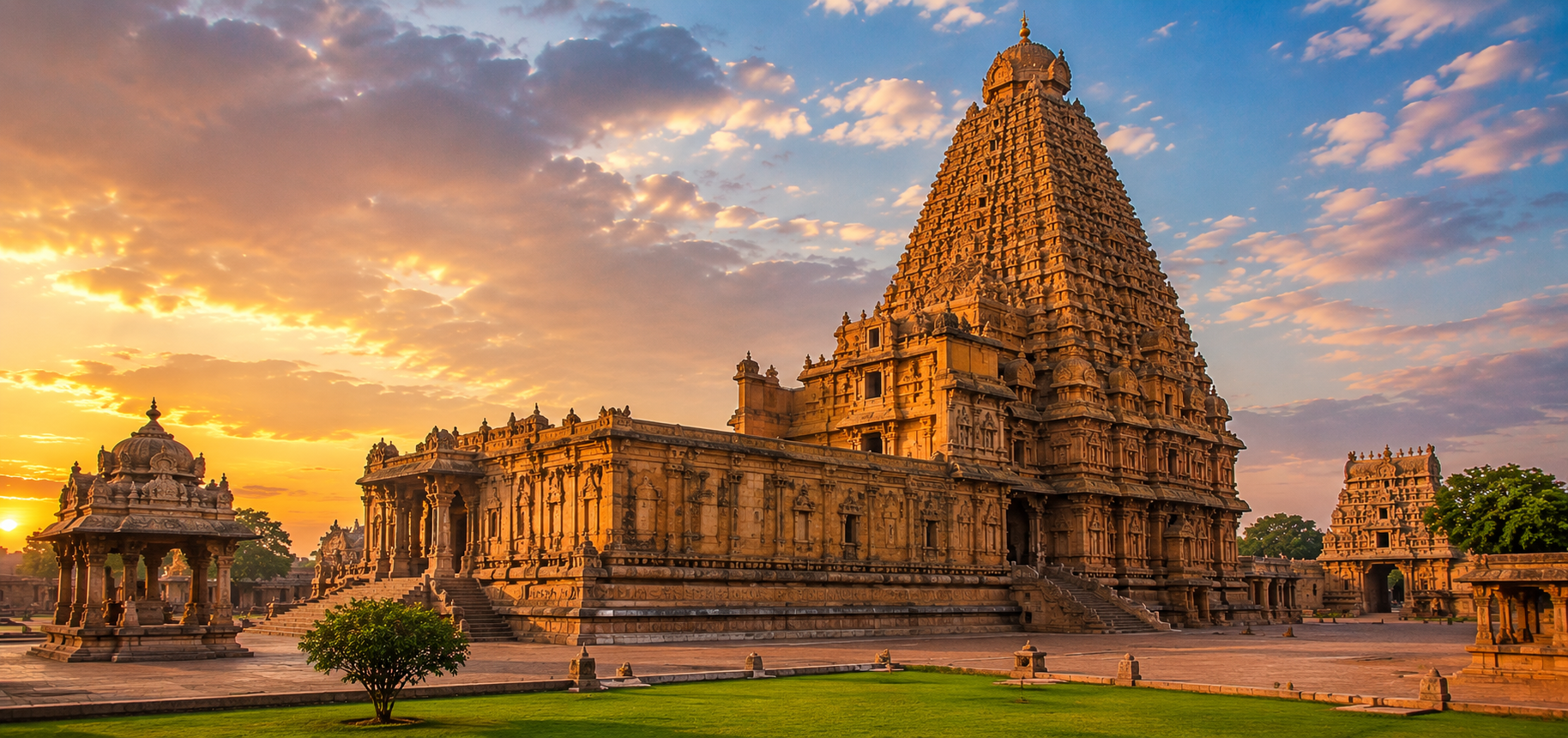
6. Brihadeeswarar Temple
Location: Thanjavur, Tamil Nadu
Main deity or importance: Lord Shiva; a UNESCO World Heritage Site among the Great Living Chola Temples
Why it is beautiful: Its main tower, or vimana, rises about 66 meters and was one of the tallest temple towers of its time. Built almost entirely of granite, the temple glows warm gold at sunrise and sunset. A huge stone Nandi (sacred bull) and detailed wall carvings add to its grandeur.
Main history: The temple was built by the great Chola king Raja Raja I and completed around 1010 CE. It shows the engineering skill of the Chola empire, which moved massive granite blocks without modern machines. Over a thousand years later, it still stands strong and active.
Best time to visit: November to February, when Thanjavur is cooler.
Travel tip: The stone courtyard becomes very hot by midday, so visit in the early morning or late afternoon and carry socks if the floor is hot for bare feet.
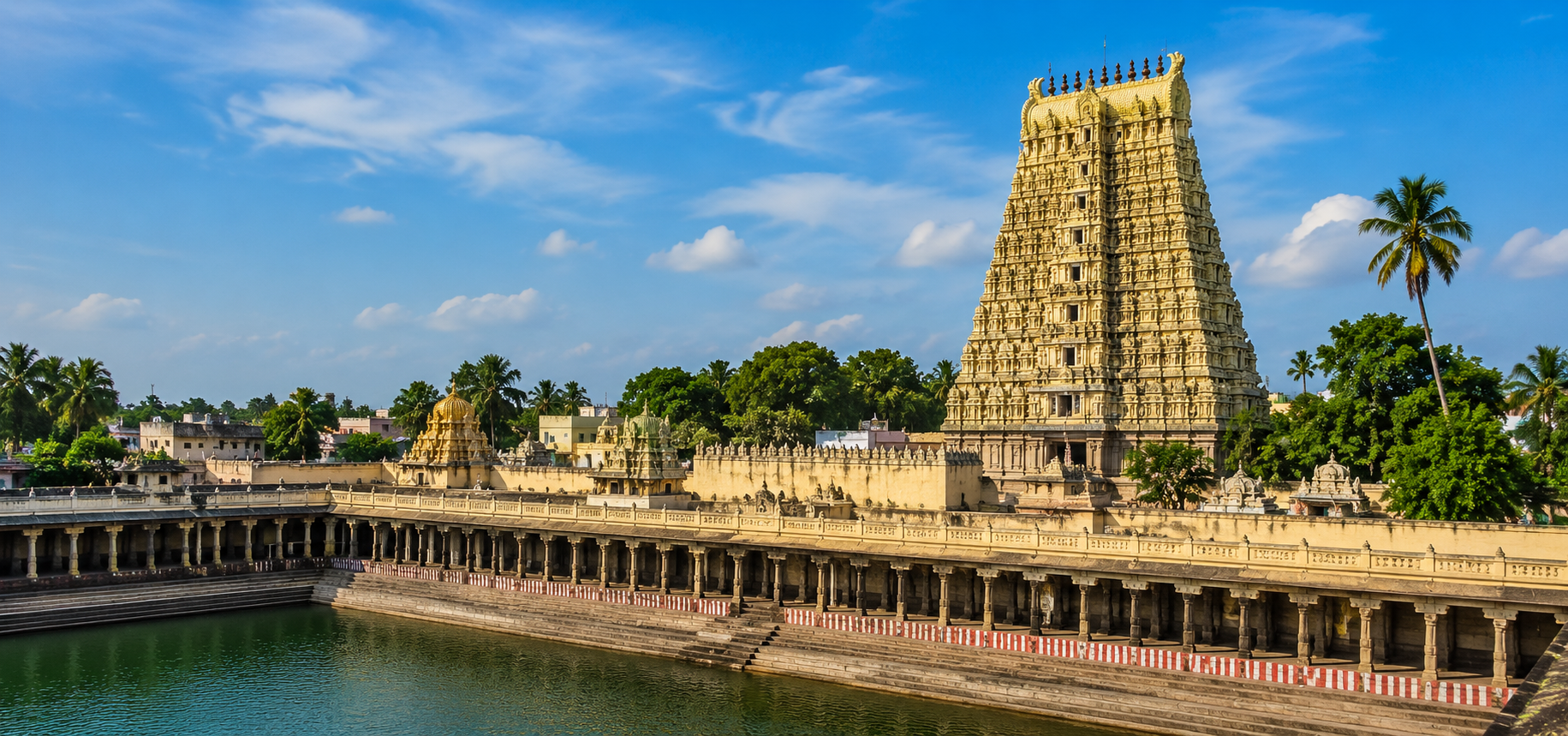
7. Ramanathaswamy Temple
Location: Rameswaram, Tamil Nadu
Main deity or importance: Lord Shiva; one of the twelve Jyotirlingas and part of the all-India Char Dham
Why it is beautiful: The temple is world-famous for its long pillared corridors, considered among the longest temple corridors in India. Rows of carved and painted pillars stretch so far that they seem endless. The temple sits on Rameswaram island, surrounded by calm blue sea.
Main history: Tradition links the site to the Ramayana, where Lord Rama is said to have worshipped Shiva here. The stone temple we see today was built and expanded over several centuries, mainly by the Pandya rulers and later the Sethupathi kings of Ramanathapuram.
Best time to visit: October to April. Sea breezes keep the island pleasant compared to inland Tamil Nadu.
Travel tip: Many pilgrims bathe at the 22 sacred wells (theerthams) inside the temple before darshan. Carry a change of clothes if you plan to take part.
8. Jagannath Temple
Location: Puri, Odisha
Main deity or importance: Lord Jagannath (a form of Krishna/Vishnu) with Balabhadra and Subhadra; one of the Char Dham sites
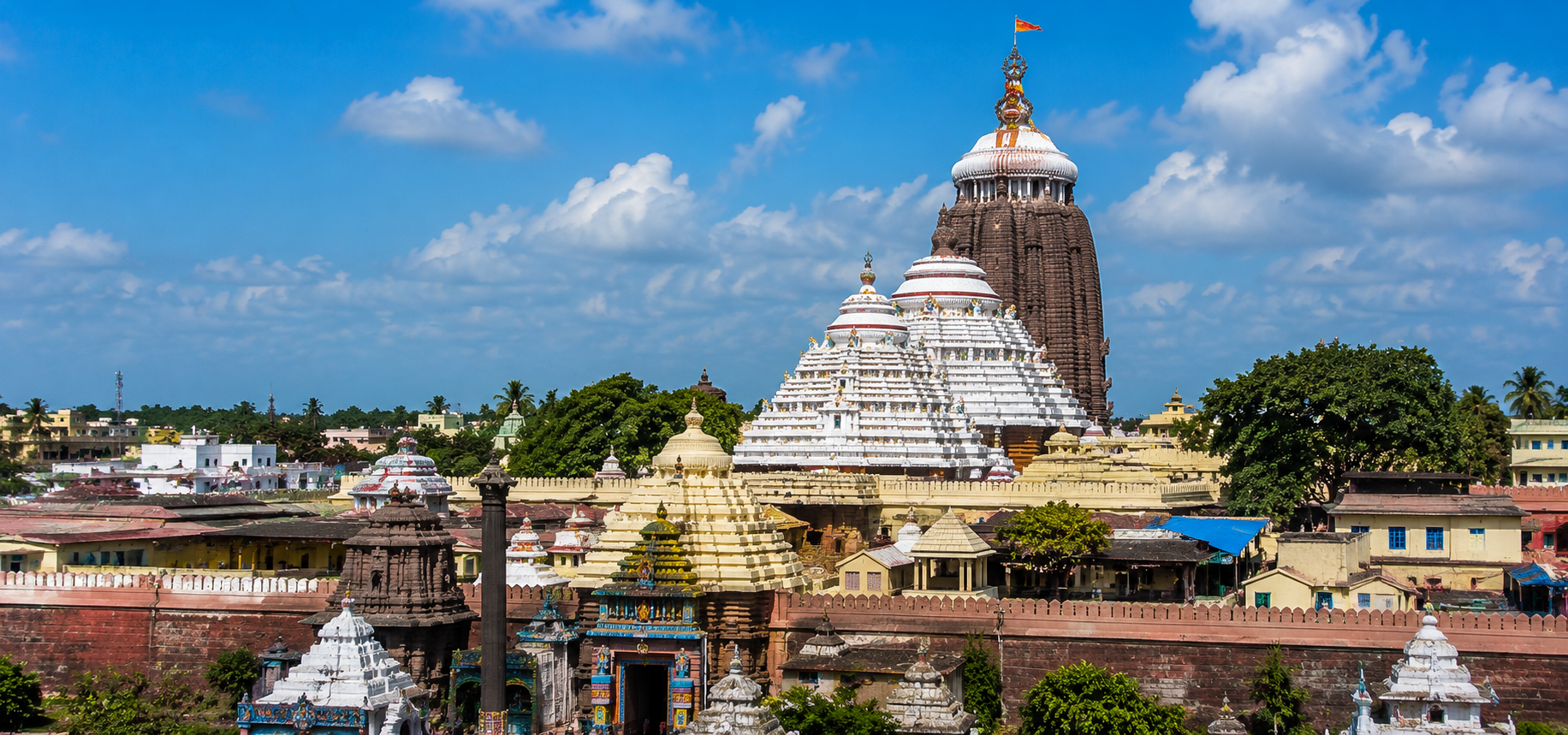
Why it is beautiful: The temple's massive curved tower dominates the skyline of Puri, and its flag is changed by priests who climb the tower every day. The temple kitchen is among the largest in the world, and the whole town moves to the temple's rhythm of rituals and festivals.
Main history: The main temple was built in the 12th century by King Anantavarman Chodaganga Deva of the Eastern Ganga dynasty. Its most famous event is the Rath Yatra, when the wooden deities travel through the streets on giant chariots pulled by thousands of devotees.
Best time to visit: October to February for comfortable weather; June–July for the Rath Yatra if you can handle very large crowds.
Travel tip: Entry inside the temple is traditionally allowed only for Hindus; other visitors can view the temple from outside and from nearby rooftops. Please respect this custom, and do try the Mahaprasad (temple food).
9. Konark Sun Temple
Location: Konark, Odisha
Main deity or importance: Surya, the Sun God; today it is a protected UNESCO World Heritage monument rather than an active temple
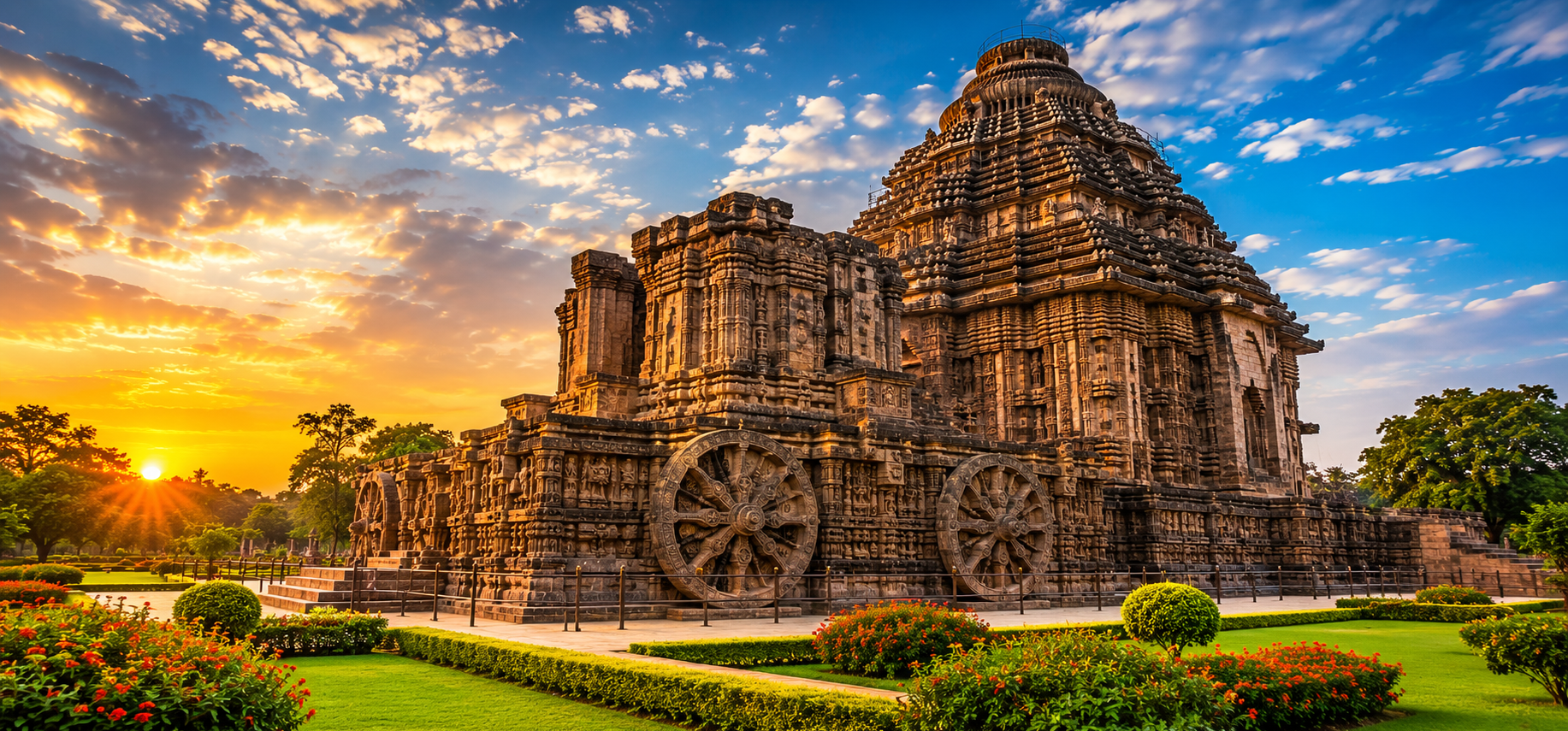
Why it is beautiful: The whole temple is designed as a giant stone chariot of the Sun God, with 24 carved wheels and seven horses. Each wheel is a masterpiece, so detailed that some are said to work like sundials. Every surface carries carvings of dancers, musicians, animals, and daily life.
Main history: The temple was built in the 13th century by King Narasimhadeva I of the Eastern Ganga dynasty. Parts of the main tower collapsed over the centuries, but even as a partial ruin, it remains one of the most admired historic temples in India.
Best time to visit: October to February. The Konark Dance Festival, usually held in December, is a wonderful time to visit.
Travel tip: This is a ticketed monument managed by the Archaeological Survey of India. Hire a licensed guide to understand the wheel carvings; you can easily combine Konark with Puri in one trip.
10. Virupaksha Temple
Location: Hampi, Karnataka
Main deity or importance: Lord Shiva as Virupaksha, with the local goddess Pampa; part of the UNESCO World Heritage Site of Hampi
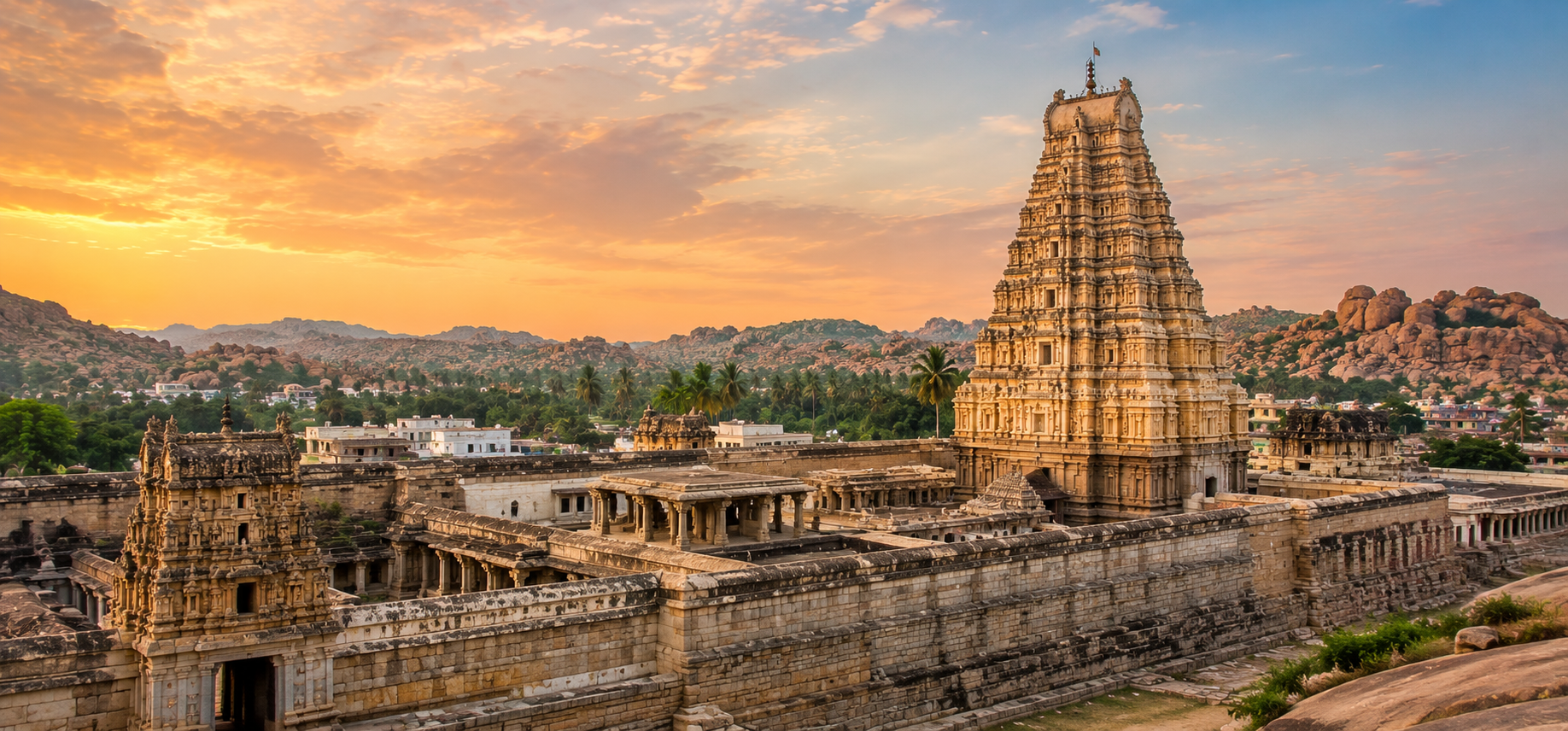
Why it is beautiful: The temple's tall eastern gopuram rises above a dreamlike landscape of giant boulders, banana farms, and the Tungabhadra river. While the great city of Vijayanagara around it fell into ruins, this temple stayed alive, so you walk through ancient history that is still breathing.
Main history: The shrine's origins go back many centuries, possibly to around the 7th century. It grew into a grand complex under the Vijayanagara empire, especially during the reign of Krishnadevaraya in the early 16th century, when major halls and towers were added.
Best time to visit: October to February, which is also the best season to explore the wider ruins of Hampi.
Travel tip: Keep at least two days for Hampi. Inside the temple, look for the famous small chamber where the gopuram appears as an inverted shadow through a pinhole effect.
11. Akshardham Temple
Location: New Delhi
Main deity or importance: Bhagwan Swaminarayan; a modern spiritual and cultural complex built by the BAPS organization
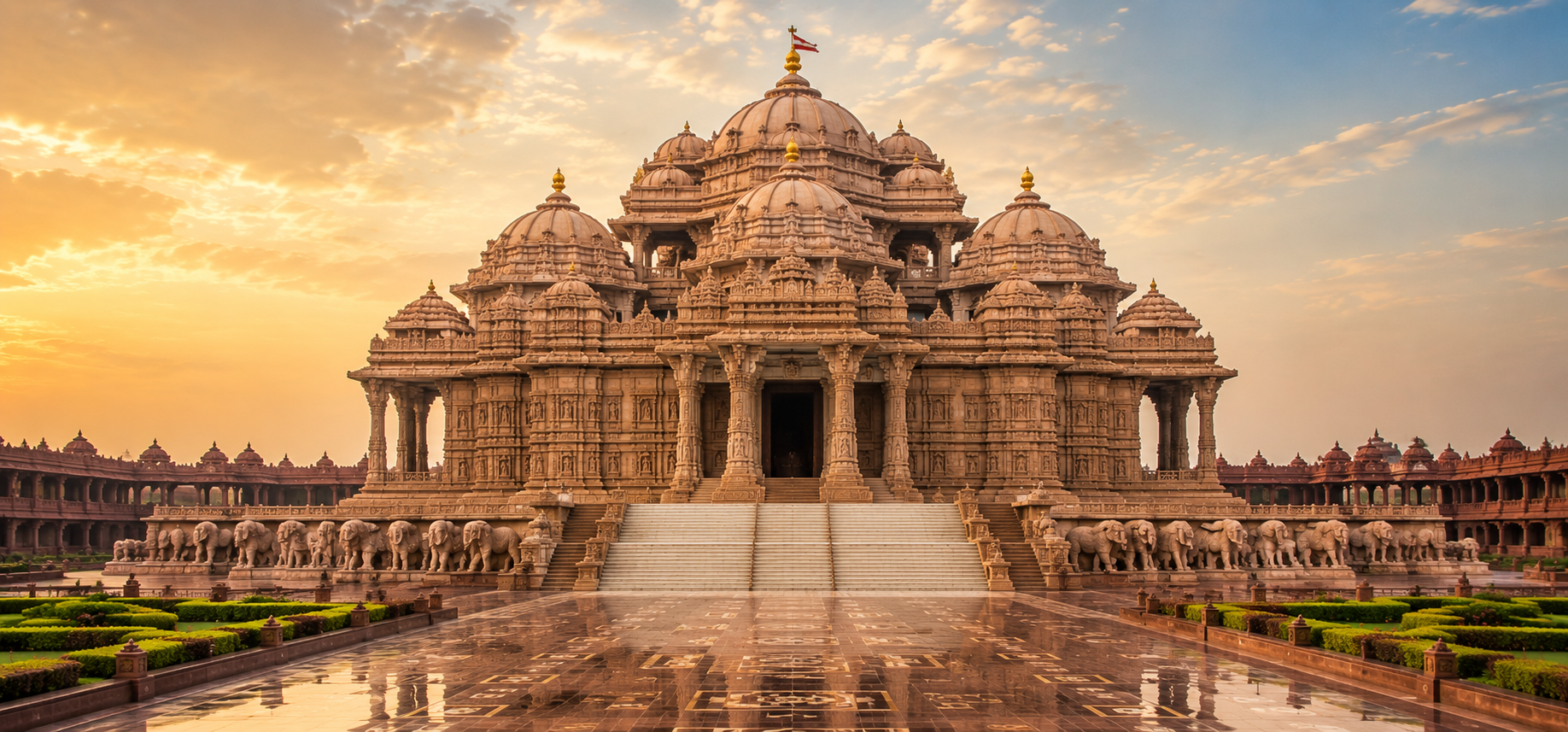
Why it is beautiful: Opened in 2005, Akshardham proves that grand temple art is still alive today. It is built from carved pink sandstone and white marble, with thousands of sculpted figures, a majestic central dome, exhibitions, boat rides, gardens, and a famous musical fountain show in the evening.
Main history: The complex was created by the BAPS Swaminarayan Sanstha and thousands of volunteers and artisans, using traditional Indian temple architecture methods combined with modern planning. It was inaugurated in 2005 and quickly became one of Delhi's most visited places.
Best time to visit: October to March. The temple is usually closed on Mondays, so plan around that.
Travel tip: Mobile phones, cameras, and most electronic items are not allowed inside; free cloakrooms are provided. Keep 3–4 hours to enjoy the exhibitions and the evening water show.
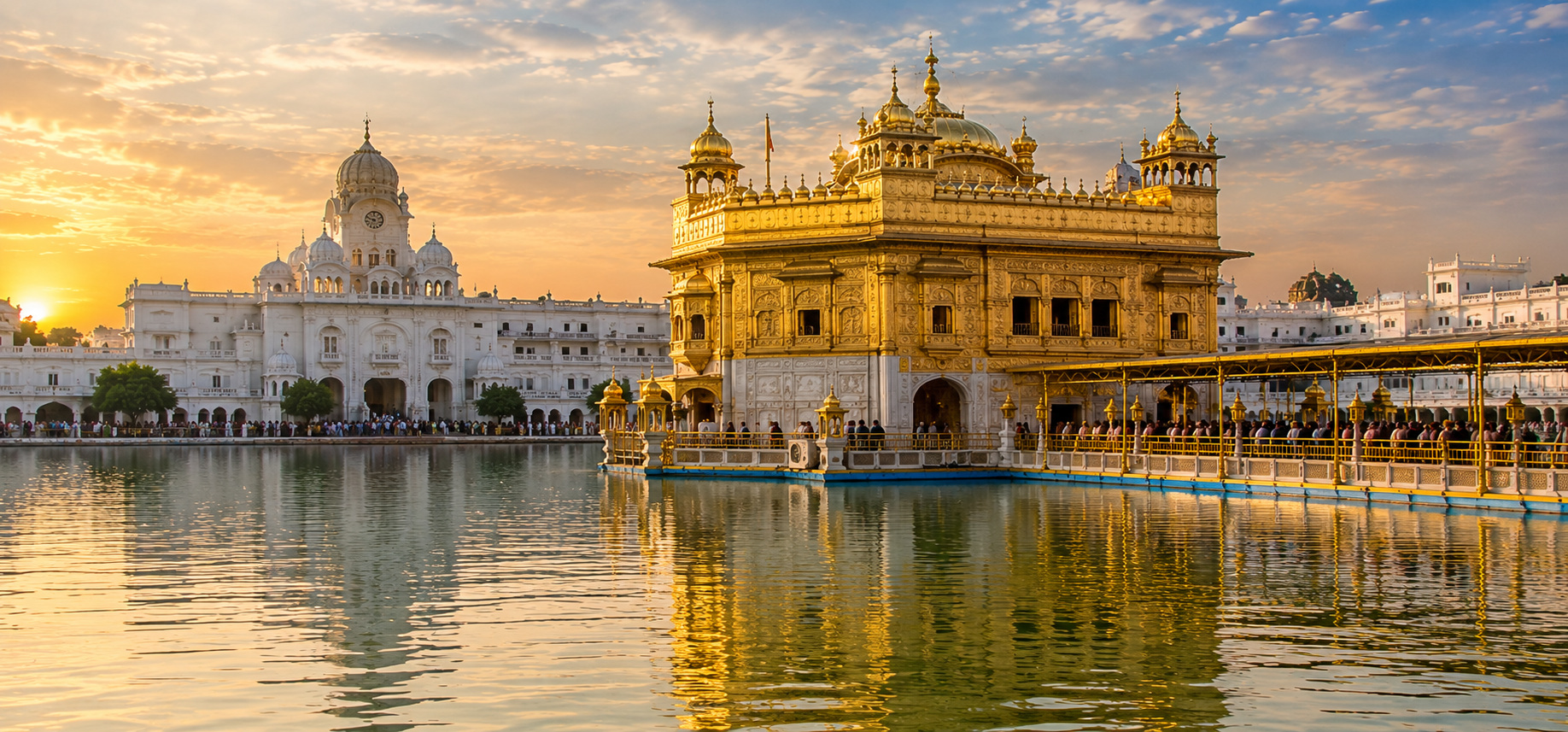
12. Golden Temple (Sri Harmandir Sahib)
Location: Amritsar, Punjab
Main deity or importance: The holiest gurdwara (shrine) of Sikhism, home to the Guru Granth Sahib; open to people of all faiths
Why it is beautiful: The gold-covered shrine seems to float in the middle of the calm Amrit Sarovar (holy pool), connected by a marble walkway. At night, its golden reflection shimmers on the water while hymns play softly. It is a gurdwara rather than a Hindu temple, but no list of India's beautiful shrines is complete without it.
Main history: The shrine was founded under Guru Arjan Dev and completed in the early 17th century (around 1604). In the early 19th century, Maharaja Ranjit Singh covered the upper floors with gold, giving the shrine its popular name. Its four doors symbolize openness to all people.
Best time to visit: October to March. Early morning and late evening offer the most peaceful atmosphere.
Travel tip: Cover your head (scarves are available free at the entrance), remove shoes, and wash your feet before entering. Do not miss the langar, the free community kitchen that serves everyone with equal respect.
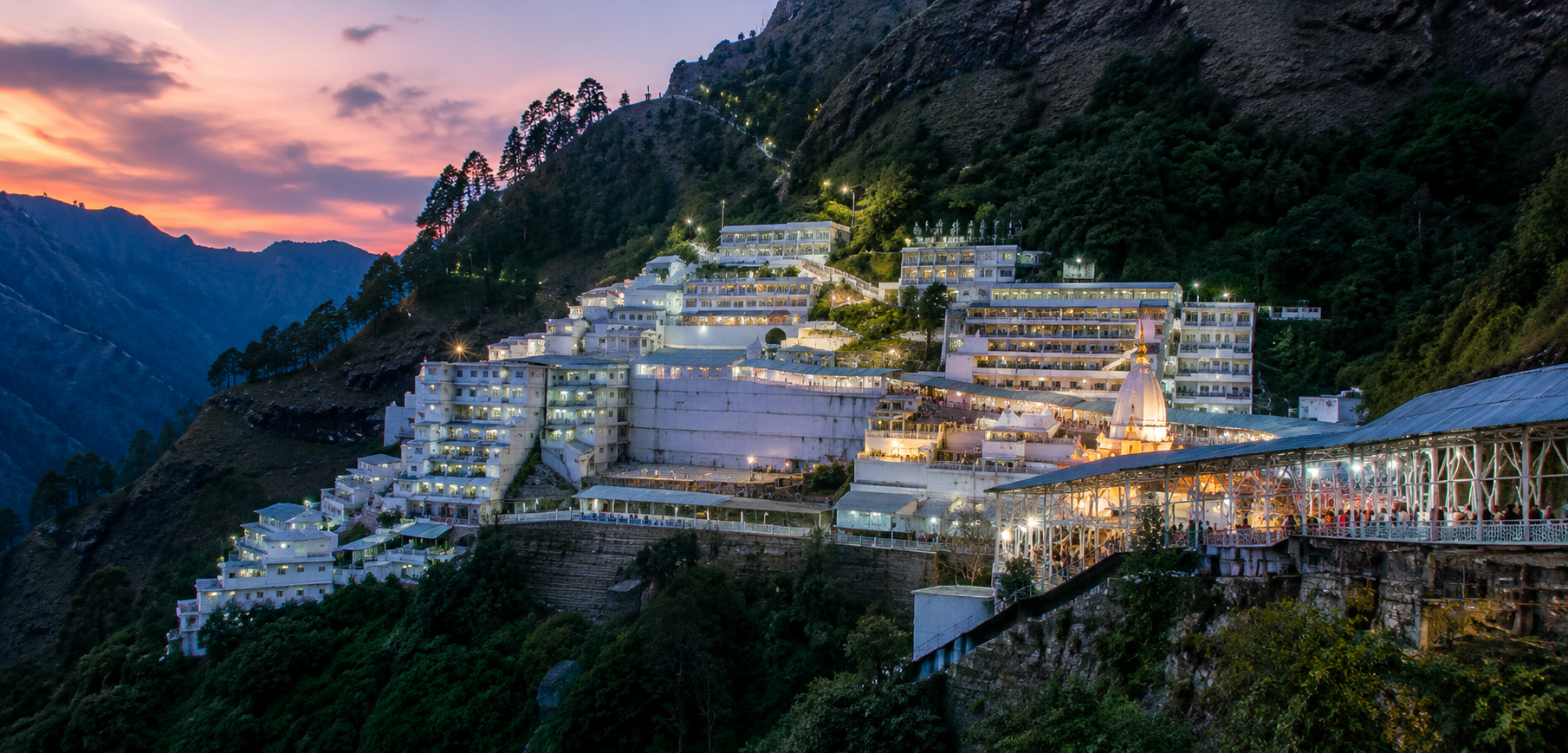
13. Vaishno Devi Temple
Location: Trikuta Hills, near Katra, Jammu & Kashmir
Main deity or importance: Goddess Vaishno Devi, worshipped in a natural cave as three sacred rock forms (pindis)
Why it is beautiful: The beauty here is the journey itself. Pilgrims walk about 12–13 km up a winding mountain path, often chanting together, with valley views opening at every turn. At the top, the goddess is worshipped inside a natural holy cave, which makes the darshan feel deeply personal.
Main history: The cave shrine has drawn pilgrims for many centuries and is connected with old legends of the goddess. In modern times, the shrine board has developed the route with lighting, shelters, food stalls, and medical points, making it one of India's most visited pilgrimages.
Best time to visit: March to October. Navratri (spring and autumn) is festive but extremely crowded; winters are cold, and the path can be difficult.
Travel tip: Yatra registration is compulsory and can be done online or at Katra. Pony, palanquin, battery car, and helicopter options exist for those who cannot walk the full route.
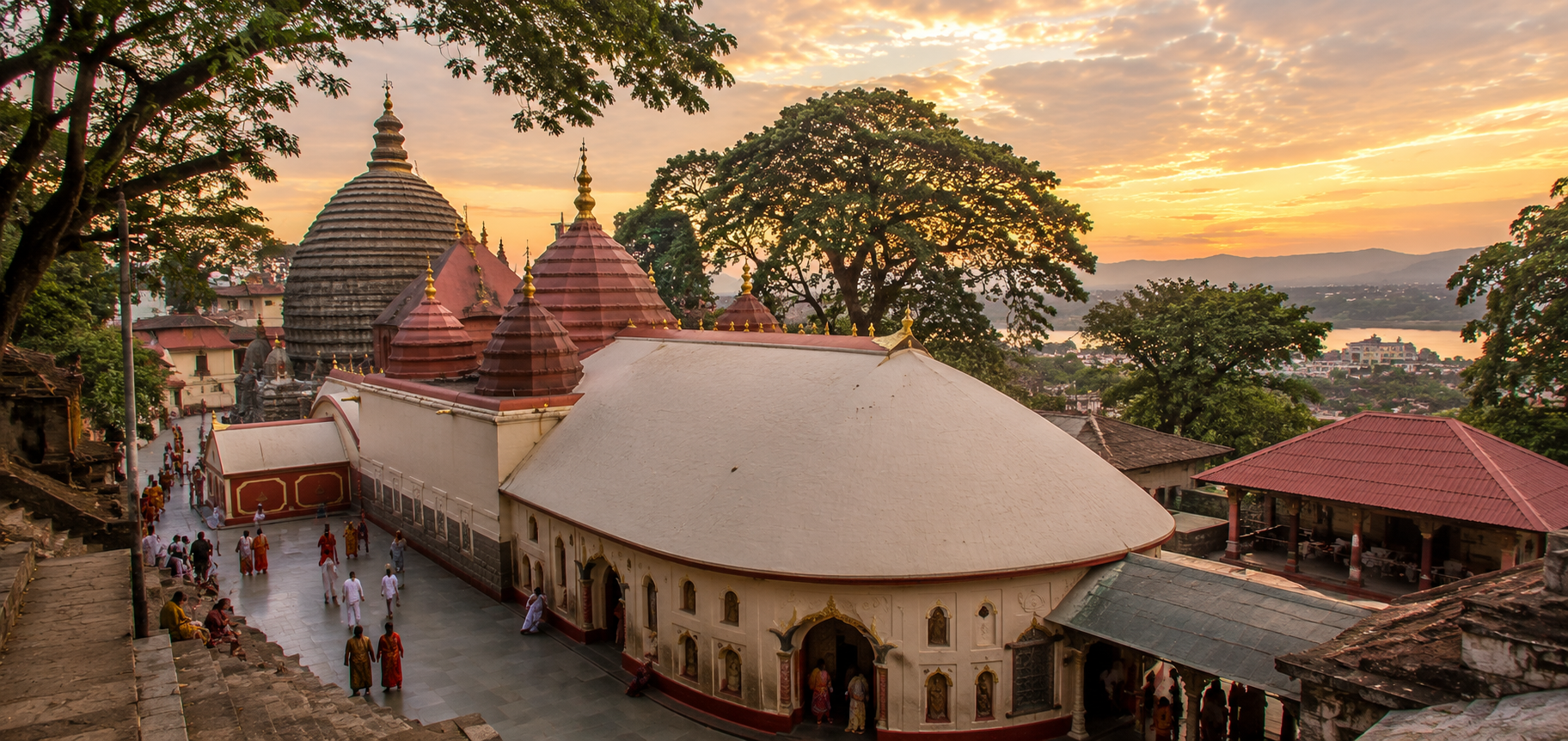
14. Kamakhya Temple
Location: Nilachal Hill, Guwahati, Assam
Main deity or importance: Goddess Kamakhya; one of the most important Shakti Peethas of India
Why it is beautiful: The temple sits on a green hill above the mighty Brahmaputra river, with sweeping views of Guwahati. Its unusual beehive-shaped dome (shikhara) and sculpted panels give it a look that is different from most temples in India. The atmosphere is intense, mystical, and unforgettable.
Main history: The shrine is ancient, but the present structure was rebuilt in 1565 by King Naranarayan of the Koch dynasty after earlier destruction. The temple is central to Shakti worship and hosts the famous Ambubachi Mela every June, which draws lakhs of devotees.
Best time to visit: October to March for pleasant weather. During the Ambubachi Mela in June, the temple remains closed for about three days and then reopens with huge celebrations.
Travel tip: Queues can be very long; a special-entry (paid) darshan ticket can save hours. Verify current queue rules on the temple's official channels before you go.
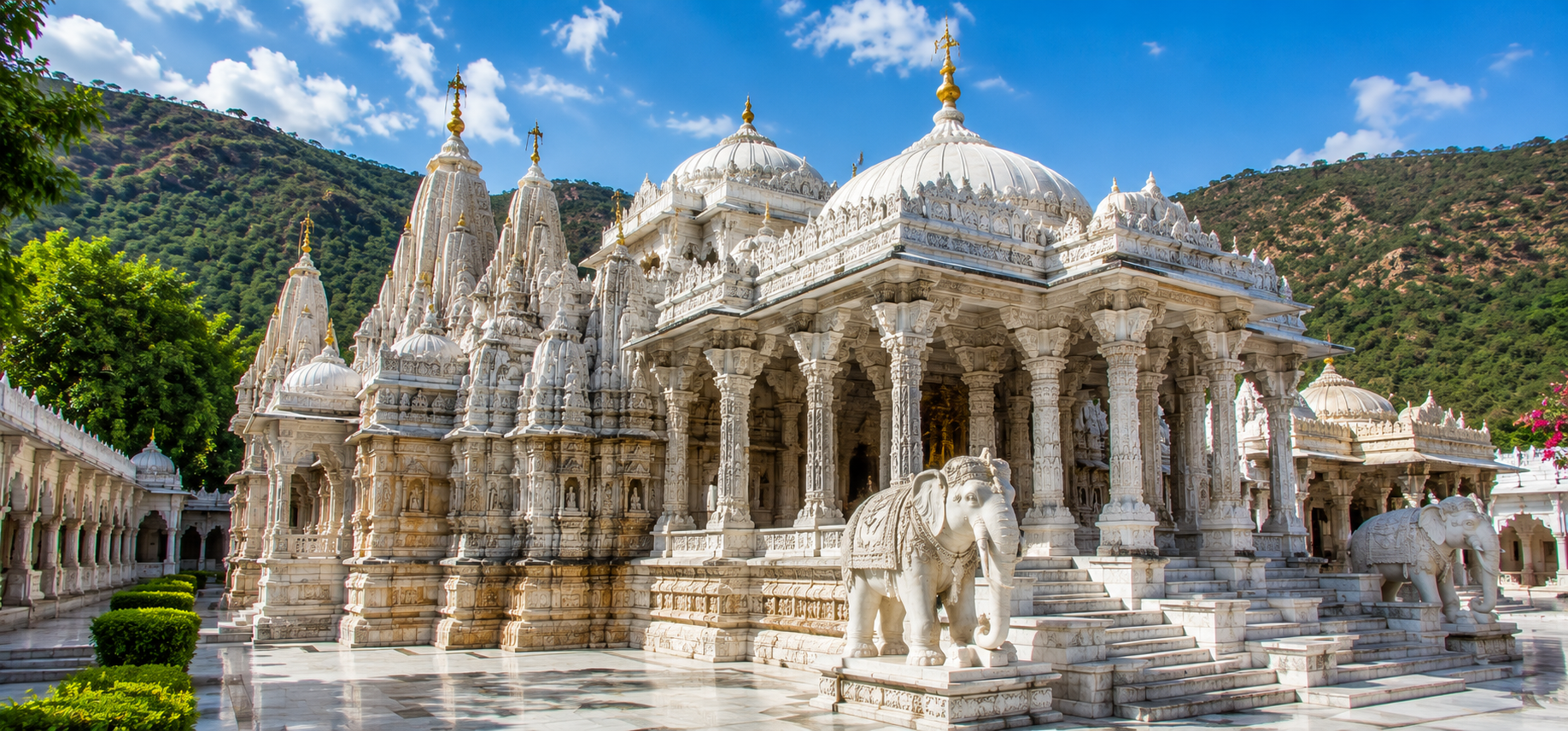
15. Dilwara Temples
Location: Mount Abu, Rajasthan
Main deity or importance: Jain temples dedicated to the Tirthankaras, including Adinath and Neminath
Why it is beautiful: From outside, the temples look simple. Inside, they hold some of the finest marble carving on Earth. Ceilings, pillars, and doorways are cut so finely that the white marble looks like lace or frozen milk. Many visitors say photos could never do justice to it, and photography is not allowed anyway.
Main history: The temples were built between the 11th and 13th centuries by Jain ministers and merchants, including Vimal Shah (the Vimal Vasahi temple, early 11th century) and the brothers Vastupala and Tejpala (the Luna Vasahi temple, 13th century). Skilled artisans worked for decades to complete them.
Best time to visit: October to March, when Mount Abu, Rajasthan's only hill station, is at its best.
Travel tip: Tourist entry is usually allowed only in the afternoon hours, while mornings are reserved for Jain worshippers. Photography and leather items are not allowed inside, so plan accordingly and verify timings locally.
A quick note on our list: the Golden Temple in Amritsar is a Sikh gurdwara and the Konark Sun Temple is now a heritage monument rather than an active shrine. We kept both on purpose, because they are among the most beautiful and historically important sacred buildings in India, and most travelers plan them together with temple trips.
Quick Comparison of 15 Beautiful Temples in India
Temple | Location | Known For | Best Time to Visit | Travel Tip |
|---|---|---|---|---|
Kedarnath | Uttarakhand | Himalayan Jyotirlinga at 3,580 m | May–Jun, Sep–Oct | Register for the yatra; carry warm clothes |
Badrinath | Uttarakhand | Colorful Vishnu shrine by the Alaknanda | May–Jun, Sep–Nov | Keep a buffer day for mountain roads |
Kashi Vishwanath | Varanasi, UP | Golden spires and the new Ganga corridor | Oct–Mar | Use lockers; phones restricted inside |
Somnath | Gujarat | Seaside Jyotirlinga rebuilt through history | Oct–Mar | Stay for the evening light-and-sound show |
Meenakshi Amman | Madurai, TN | 14 colorful gopurams, thousand-pillar hall | Oct–Mar | Go early morning; dress modestly |
Brihadeeswarar | Thanjavur, TN | 1,000-year-old Chola granite tower | Nov–Feb | Avoid midday; the stone floor gets hot |
Ramanathaswamy | Rameswaram, TN | Endless pillared corridors, 22 holy wells | Oct–Apr | Carry spare clothes for the theertham bath |
Jagannath | Puri, Odisha | Rath Yatra and giant temple kitchen | Oct–Feb | Entry for Hindus only; view from rooftops otherwise |
Konark Sun Temple | Konark, Odisha | 13th-century stone chariot of the Sun | Oct–Feb | Buy the ASI ticket; hire a licensed guide |
Virupaksha | Hampi, Karnataka | Living temple amid Vijayanagara ruins | Oct–Feb | Keep two days for the full Hampi site |
Akshardham | New Delhi | Modern carved sandstone-and-marble complex | Oct–Mar | Closed Mondays; no phones or cameras inside |
Golden Temple | Amritsar, Punjab | Gold shrine floating on a holy pool | Oct–Mar | Cover your head; experience the langar |
Vaishno Devi | Katra, J&K | Cave shrine after a 12–13 km hill trek | Mar–Oct | Yatra registration is compulsory |
Kamakhya | Guwahati, Assam | Hilltop Shakti Peetha above the Brahmaputra | Oct–Mar | Consider special-entry darshan to skip long queues |
Dilwara Temples | Mount Abu, Rajasthan | Lace-like Jain marble carving | Oct–Mar | Tourist entry in afternoons; no photography |
Practical Tips Before Visiting Temples in India
A little planning makes temple travel smooth and respectful. Keep these simple points in mind:
Dress modestly. Cover shoulders and knees. Some temples require traditional wear or head covering; a scarf or shawl in your bag always helps.
Footwear goes off. Shoes are removed before entering. Use official shoe counters, and carry socks for hot stone floors in summer.
Check photography rules. Many temples ban cameras and phones inside the main shrine. Look for signboards or ask staff before clicking.
Time your visit. Early mornings and weekday afternoons are usually the calmest. Festivals are magical but bring huge crowds.
Book online where possible. Several major temples offer online darshan slots, special-entry tickets, and yatra registration. Always use official websites.
Respect local customs. Follow queue systems, keep your voice low, and never touch idols, priests, or ritual items without permission.
Plan for weather. Himalayan shrines need warm layers and fitness; coastal and southern temples are best in winter months.
Verify before you travel. Timings, entry rules, dress codes, and festival dates can change. Recheck the latest details from official sources close to your travel date.
Common Mistakes Tourists Should Avoid
Not checking timings. Many temples close in the afternoon or on certain days (for example, Akshardham on Mondays), and Himalayan temples close for entire winters.
Arriving during peak festivals without planning. Events like Rath Yatra or Navratri are wonderful, but without booked stays and darshan slots, they can be overwhelming.
Ignoring dress and entry rules. Shorts, sleeveless tops, or leather items may be refused entry at several temples. Some shrines, like Jagannath Puri, restrict entry to Hindus.
Taking photos where it is not allowed. This can hurt sentiments and even lead to fines or confiscated devices. When in doubt, keep the camera away.
Trusting unofficial "agents". Buy tickets and book pujas only through official counters or websites, not from touts outside the gates.
Rushing the visit. Great temples reward slow walking. Give yourself time to see the carvings, sit quietly, and soak in the atmosphere.
Conclusion
The beautiful temples in India are much more than places of worship. They are open-air museums, engineering marvels, community kitchens, festival grounds, and islands of peace, all at once. A single trip can show you a thousand-year-old Chola tower, a golden shrine on water, and a cave high in the mountains.
The clear takeaway is this: pick two or three temples from this list that match your travel style, check the latest timings and rules, dress respectfully, and travel slowly. Whether you go for faith, history, architecture, or simple curiosity, India's temples will give you memories, and a kind of quiet, that stay with you long after the journey ends.
0 comments