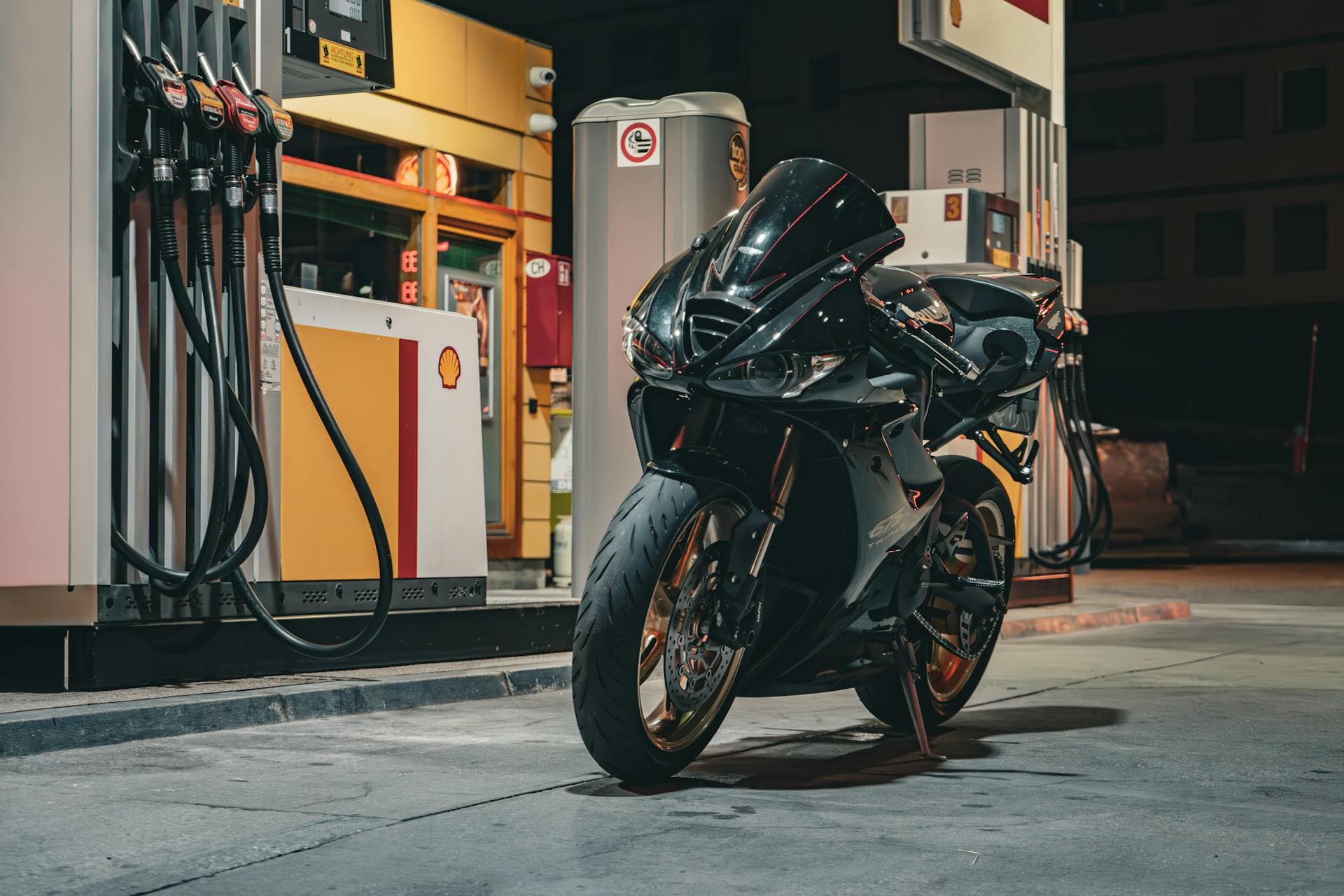
Picture this: in 1990, your father probably filled up his Bajaj Chetak scooter for around ₹11 per litre and barely thought about it. In 2026, your delivery rider checks the fuel app every morning and curses at ₹102 per litre. Same petrol. Same country. A 9× price increase across one generation. What actually happened? Why does the petrol price feel like it has a mind of its own?
This is not just a story about numbers. It is a story about global oil politics, the rupee-dollar exchange rate, government taxes, election cycles, refining margins, and a single decision in June 2010 that quietly transformed how India prices fuel forever. Whether you ride a two-wheeler, drive a car, run a small business, or simply pay for a Zomato delivery, the petrol price affects you every single day.
In this complete educational guide from Clikit, we will walk you through petrol prices in India year-wise from 1990 to 2026, explain every factor that pushes prices up or pulls them down, break down exactly what you pay tax on, and tell you what to expect next. This is the article we wish every Indian household had bookmarked.
1. Why Petrol Prices Matter to Every Indian
Petrol is not just fuel. It is a hidden input cost in almost everything you consume. The vegetables in your sabzi mandi reached there in a diesel truck. Your Amazon package travelled on petrol-powered last-mile delivery bikes. The auto-rickshaw fare, the Uber surge, the cost of a Mumbai dabba reaching your office — every one of these has petrol or diesel embedded inside its price tag.
India is the third-largest oil consumer in the world, after the United States and China. We consume around 5.6 million barrels of crude oil every single day. We also import nearly 87 to 88 percent of all the crude oil we use. This combination — massive consumption plus high import dependency — is precisely what makes petrol prices in India so sensitive to events happening thousands of kilometres away, in Texas, Tehran or Moscow.
Understanding what drives petrol prices is no longer a niche economic topic. It is basic financial literacy for any Indian who earns, spends or saves.
2. Year-Wise Petrol Prices in India: 1990 to 2026
Below is the most comprehensive year-wise petrol price table you will find, covering 36 years of pricing history in Delhi (the standard benchmark city in India). Prices are approximate annual averages based on data from the Petroleum Planning and Analysis Cell (PPAC), Indian Oil Corporation, and historical news archives. Actual prices within any given year had significant intra-year variation, so consider these as fair representative figures.
Year | Petrol Price in Delhi (₹/litre) | Key Context |
|---|---|---|
1990 | ~11.00 | Strict APM era; prices government-controlled and subsidised |
1991 | ~14.62 | Balance of payments crisis; Liberalisation begins |
1992 | ~15.71 | Manmohan Singh's reform budgets continue |
1993 | ~15.71 | Prices frozen — government continues to absorb shock |
1994 | ~16.78 | Modest hike under United Front government |
1995 | ~16.78 | Crude prices stable globally; rupee at ₹32/USD |
1996 | ~21.13 | Significant administered hike to reduce oil pool deficit |
1997 | ~22.84 | Vajpayee government takes early reform steps |
1998 | ~23.94 | Asian financial crisis softens crude globally |
1999 | ~23.80 | Marginal correction; Kargil war pressure on rupee |
2000 | ~27.29 | Brent crude hits $30+/bbl; petrol crosses ₹27 |
2001 | ~28.70 | 9/11 attacks rattle global energy markets |
2002 | ~29.07 | APM dismantled in April 2002 — first move to market pricing |
2003 | ~31.60 | US invasion of Iraq pushes crude up |
2004 | ~36.13 | UPA-1 takes office; crude rises to $50/bbl |
2005 | ~41.99 | Hurricane Katrina disrupts US refining |
2006 | ~45.29 | OMCs face huge under-recoveries |
2007 | ~43.07 | Government cuts excise to reduce pump shock |
2008 | ~47.58 | Brent crude touches all-time high of $147 in July |
2009 | ~43.33 | Global financial crisis crashes crude to $40 |
2010 | ~51.44 | Petrol DEREGULATED on 25 June 2010 (Kirit Parikh Committee) |
2011 | ~63.77 | Arab Spring; Libya war; crude back above $110 |
2012 | ~68.57 | Iran sanctions tighten supply |
2013 | ~72.26 | Rupee crashes to ₹68/USD; current account crisis |
2014 | ~72.43 | Modi government takes office; diesel deregulated in October |
2015 | ~60.50 | Crude crashes to ~$30/bbl; Centre raises excise 9 times |
2016 | ~64.38 | Excise duty on petrol peaks at ₹21.48/litre |
2017 | ~69.99 | Daily dynamic pricing begins on 16 June 2017 |
2018 | ~78.52 | Brent rises to $80; rupee touches record low |
2019 | ~73.83 | Brief crude softening, then re-acceleration |
2020 | ~80.43 | COVID lockdown; Centre raises excise by ₹10/litre in May |
2021 | ~95.41 | Crossed ₹110 in Nov 2021; first excise cut of ₹5 on 4 Nov |
2022 | ~96.72 | Russia invades Ukraine; Brent crosses $140 in March; ₹8 excise cut in May |
2023 | ~96.72 | OMCs effectively freeze retail prices |
2024 | ~94.72 | OMCs cut prices by ₹2/litre in March — first cut in 2+ years |
2025 | ~94.77 | Centre hikes excise by ₹2/litre on 8 April; OMCs absorb the hike |
May 2026 | 102.12 | US-Iran conflict; Brent surges from $70 to $122; OMCs raise prices after 49 months |
Quick Insight
From 1990 to 2026, the petrol price in Delhi has multiplied by roughly 9 to 10 times. Inflation-adjusted, this is still a substantial real increase, mostly explained by three factors: (1) the rupee weakening from ~₹17/USD in 1990 to ~₹85/USD in 2026, (2) the global crude oil price rising on average, and (3) repeated excise duty hikes by the central government from 2014 onwards.
Three Distinct Eras of Petrol Pricing in India
If you look at the 1990–2026 data carefully, you can see three clearly separate eras:
Era 1: The Administered Pricing Mechanism (Pre-2002)
From 1990 to early 2002, petrol prices were set entirely by the Government of India under the Administered Pricing Mechanism (APM). Oil Marketing Companies were compensated through an "oil pool account" funded by the Centre. Prices changed only when the government formally announced revisions, typically once or twice a year. This system protected consumers from short-term crude shocks but created huge fiscal burdens and large under-recoveries for OMCs.
Era 2: Transitional Pricing (2002–2010)
The NDA government dismantled the APM in April 2002, allowing OMCs to revise prices based on international benchmarks every fortnight. However, in practice, the government still exerted strong informal control. When global crude rose sharply during 2007–2008, OMCs were not allowed to pass the full increase to consumers — instead, the Centre issued "oil bonds" to compensate them. By 2010, the financial strain on the system had become unsustainable.
Era 3: Market-Linked Pricing (2010 onwards)
On 25 June 2010, petrol was officially deregulated. Diesel followed in October 2014. From 16 June 2017, prices began to be revised daily at 6:00 AM. This is the modern era — prices now move with international crude (with a small lag), with state and central taxes acting as the only buffer between you and the volatility of the global oil market.
3. Current Petrol Prices in Major Indian Cities (May 2026)
Despite living in one country, the price you pay for petrol varies dramatically across India. As of 26 May 2026, here's what petrol costs in major cities:
City | Petrol Price (₹/litre) | Why It's That Price |
|---|---|---|
Delhi | ₹102.12 | Lowest VAT among metros (~19.4%) |
Mumbai | ₹111.21 | Maharashtra VAT 26% + ₹5.12/litre |
Kolkata | ₹113.47 | High West Bengal VAT |
Chennai | ₹107.87 | Tamil Nadu VAT + ₹11.50 cess |
Bengaluru | ₹110.93 | Karnataka raised sales tax in 2024 |
Hyderabad | ₹115.69 | Telangana high VAT |
Ahmedabad | ₹101.81 | Gujarat lower VAT |
Port Blair (A&N Islands) | ~₹82.46 | Cheapest in India (VAT only ₹0.82/litre) |
4. Factors That INCREASE Petrol Prices in India
Whenever you see petrol prices climb, one or more of the following forces is at work. Understanding these helps you predict price movements before they hit the pump.
4.1 Global Crude Oil Prices
This is the single biggest driver. Since India imports nearly 88% of its crude oil, any rise in international benchmarks (Brent and WTI) flows almost directly into the dealer-charged price. A simple rule of thumb: every $10 per barrel rise in Brent crude adds roughly ₹5–7 per litre to the base petrol price before taxes. The 2026 spike is a textbook example — Brent jumped from ~$70 to ~$122/barrel in under four weeks because of US-Iran tensions and disruption of the Strait of Hormuz.
4.2 Rupee Depreciation Against the US Dollar
Crude oil is invoiced globally in US dollars. So when the rupee weakens, even if crude prices remain unchanged in dollar terms, the cost in rupee terms goes up. The rupee has fallen from roughly ₹17/USD in 1990 to ~₹85/USD in 2026 — a 5× depreciation. Every ₹1 fall against the USD increases the landed cost of crude by roughly the same percentage.
4.3 Central Excise Duty Increases
The Government of India levies an excise duty in fixed rupees per litre. This duty has been raised many times — from ₹9.48/litre in 2014 to a peak of ₹32.90/litre in 2021. Even after recent cuts, it stands at around ₹21.90/litre. Excise hikes flow straight to the pump.
4.4 State VAT (Value Added Tax)
Every state in India charges its own VAT on petrol, and the rates vary wildly. Andhra Pradesh charges the equivalent of ₹29.06/litre. Andaman & Nicobar Islands charges just ₹0.82/litre. Because VAT is calculated as a percentage of the dealer price, it amplifies the impact of any base-price increase.
4.5 Dealer Commission
Approximately ₹3.77 per litre goes to the petrol pump owner as commission. While this is a smaller component, OMCs sometimes revise dealer margins, which adds to the retail price.
4.6 Geopolitical Tensions and Wars
Wars in oil-producing regions cause supply shocks that spike global prices. Recent examples:
Russia-Ukraine war (Feb 2022): Brent crossed $140 in March 2022.
Iran-Israel/US-Iran conflict (early 2026): Brent surged 75% from $70 to $122 in weeks.
Iraq War (2003): Crude prices saw multi-year sustained rises.
OPEC+ production cuts: When OPEC+ tightens supply, prices climb.
4.7 Refining Costs and Margins
Crude oil must be refined into petrol. Refining margins (Gross Refining Margins or GRMs) fluctuate based on global demand for refined products. When GRMs surge — as they did in 2022 — the dealer price rises even at constant crude prices.
4.8 Transportation and Freight Costs
Petrol travels from refineries to retail outlets via pipelines, rail and road. States farther from refineries (like Rajasthan or the north-east) incur higher freight costs, which directly raises pump prices.
4.9 Inflation
Petrol prices themselves are a major contributor to inflation, but the relationship runs both ways. High general inflation pushes up costs across the petroleum supply chain — from refinery wages to transportation to retail operations — and these costs eventually show up at the pump.
5. Factors That DECREASE Petrol Prices in India
Petrol prices in India are notoriously "sticky" on the way down — meaning they rise faster than they fall. But here are the conditions that genuinely bring them down:
5.1 Falling International Crude Oil Prices
When global crude crashes — as it did in 2009 (financial crisis), 2014–2016 (oversupply), and April 2020 (COVID lockdown) — pump prices should fall. In practice, however, the Centre often raises excise duties during these periods to capture the windfall, so consumers rarely see the full benefit.
5.2 Rupee Appreciation
A stronger rupee makes crude imports cheaper. This is rare in recent years but did happen briefly in 2010–2011 and 2016–2017.
5.3 Central Excise Duty Cuts
The most direct way prices fall. The two biggest excise cuts in recent history:
4 November 2021: ₹5/litre cut on petrol
22 May 2022: ₹8/litre cut on petrol (after the Russia-Ukraine war shock)
5.4 State VAT Reductions
Several states (mostly BJP-ruled) cut VAT alongside the 2021 and 2022 central excise reductions, bringing additional relief in those states.
5.5 OPEC+ Increasing Production
When OPEC+ countries decide to increase oil output, global prices fall, eventually benefiting Indian consumers.
5.6 Discounted Russian Crude
Since 2022, India has significantly increased imports of discounted Russian crude (now ~36% of total crude imports). This has saved billions of dollars in foreign exchange and helped OMCs absorb price pressure.
5.7 Strategic Petroleum Reserves (SPRs)
India maintains strategic crude oil reserves at Visakhapatnam, Mangalore and Padur with a combined storage capacity of 5.33 million tonnes. When global prices spike, the government can release reserves to ease supply pressure.
5.8 Ethanol Blending
India achieved 20% ethanol blending (E20) in 2025 — five years ahead of the original 2030 target. This reduces dependence on imported crude and saves over ₹1.36 lakh crore in foreign exchange.
5.9 Lower Global Demand
Economic slowdowns, recessions and pandemics reduce global demand for petrol, pushing crude prices down. The COVID-19 lockdowns in April 2020 briefly took Brent crude to under $20 per barrel.
6. Petrol Price Structure: Where Every Rupee Goes
Whenever you pay ₹100 at a petrol pump, only a fraction goes towards the actual petrol. The rest is split between taxes, dealer commission and refining margins. Here is the typical breakdown for Delhi at a retail price of around ₹94.72/litre (May 2024 reference):
Component | Amount (₹/litre) | Share of Retail Price |
|---|---|---|
Price charged to dealers (crude + refining + freight) | ~55.46 | ~58.6% |
Central Excise Duty | 19.90 | ~21.0% |
Dealer Commission | 3.77 | ~4.0% |
State VAT (Delhi @ 19.4%) | 15.39 | ~16.3% |
Final Retail Price | 94.72 | 100% |
"Roughly 37% to 54% of what you pay at the pump in India is tax — central excise plus state VAT. In Mumbai, the tax component can exceed half the retail price."— PRSIndia analysis, October 2021
7. Key Historical Events That Reshaped Fuel Prices
1991 — Economic Liberalisation
The balance-of-payments crisis forced India to open up its economy. Although petrol remained government-priced, the seeds of market-based pricing were planted here.
2002 — APM Dismantled
The NDA government ended the Administered Pricing Mechanism in April 2002, allowing OMCs to begin revising prices based on international benchmarks (though informal government control continued).
2008 — Crude Oil Price Records and Crash
Brent crude touched an all-time high of $147 per barrel in July 2008, then crashed to $40 by year-end during the global financial crisis. Indian consumers saw limited benefit due to government-controlled prices.
25 June 2010 — Petrol Officially Deregulated
The single most important date in modern Indian petrol pricing. The UPA government accepted the Kirit Parikh Committee recommendations and let OMCs set petrol prices based on market conditions.
October 2014 — Diesel Deregulated
The Modi government deregulated diesel just as global crude prices began crashing — perfect timing that masked the impact on consumers.
2014–2016 — Centre Raises Excise 9 Times
As global crude crashed from $110 to under $30, the Centre raised excise duty on petrol nine times, taking it from ₹9.48 to ₹21.48 per litre. Consumers saw very limited benefit from low crude.
16 June 2017 — Daily Dynamic Pricing
OMCs began revising petrol and diesel prices every single day at 6:00 AM based on a 15-day rolling average of international product prices.
May 2020 — COVID Excise Hike
As global crude crashed to under $20 per barrel during the pandemic, the Centre raised excise duty by ₹10/litre on petrol and ₹13/litre on diesel — capturing the entire windfall for the exchequer.
November 2021 — All-Time Highs
Petrol crossed ₹110 in Delhi and ₹115.80 in Mumbai. After massive public backlash, the Centre cut excise by ₹5/litre on 4 November 2021.
February–May 2022 — Russia-Ukraine War
Russia invaded Ukraine, sending Brent crude past $140 per barrel. Centre cut excise by another ₹8/litre on 22 May 2022.
March 2024 — First Retail Cut in Two Years
OMCs cut retail prices by ₹2/litre just before the general elections — the first cut after a long freeze.
March–May 2026 — Iran Conflict and Hormuz Shock
US and Israeli strikes on Iran disrupted the Strait of Hormuz, sending Brent from $70 to $122. The Centre cut excise by ₹10/litre on 27 March 2026, but the cut was absorbed entirely by OMCs. After 49 months of price stability, OMCs finally hiked retail prices starting 15 May 2026.
8. Who Actually Decides Petrol Prices in India?
Many Indians believe the Prime Minister or Petroleum Minister decides petrol prices. The reality is more nuanced. Since the 2010 deregulation, prices are set by the three state-owned Oil Marketing Companies (OMCs):
Indian Oil Corporation (IOC) — India's largest fuel retailer
Bharat Petroleum Corporation Limited (BPCL)
Hindustan Petroleum Corporation Limited (HPCL)
Together, these three companies control roughly 95% of fuel retail in India. Every morning at 6:00 AM, they revise prices based on:
The 15-day rolling average of international petroleum product prices
The USD-INR exchange rate
Freight and distribution costs to each location
The Centre then adds excise duty, and the state adds VAT — that becomes your final pump price.
The Reality Check
In practice, the Centre exerts significant informal control, especially around elections. The 49-month price freeze from May 2022 to May 2026 was widely attributed to political directives rather than market dynamics. OMCs often absorb under-recoveries during election cycles and recover them later.
9. Why Petrol Costs Different Amounts in Different States
Why is petrol cheaper in Delhi than in Mumbai? Why is it cheapest in Andaman & Nicobar? The answer comes down to three reasons:
9.1 State VAT Differences
Each state sets its own VAT rate on petrol. The variation is enormous:
Highest: Andhra Pradesh (~₹29.06/litre effective VAT)
Mid-range: Maharashtra, Karnataka, Telangana (₹20–25/litre)
Lower: Delhi, Gujarat (~₹15–17/litre)
Lowest: Andaman & Nicobar Islands (₹0.82/litre)
9.2 Ad-Valorem Tax Structure
Most state VAT is "ad valorem" — meaning a percentage of the dealer price rather than a fixed rupee amount. So when crude prices rise, the VAT amount automatically rises too, amplifying differences between states.
9.3 Freight and Transportation
Landlocked or remote regions incur higher transportation costs. Sri Ganganagar in Rajasthan briefly had India's highest petrol price (~₹122/litre in May 2022) due to its distance from the nearest refinery.
10. The GST Debate: Why Petrol Is Still Outside GST
When GST was rolled out on 1 July 2017, five products were deliberately kept out: crude oil, petrol, diesel, natural gas and aviation turbine fuel. The constitutional provision to bring them under GST exists — only a GST Council notification is needed.
So why hasn't it happened? Two reasons:
Revenue dependence: Petroleum taxes contribute 25–35% of state governments' own tax revenue.
Tax autonomy: Under GST, states would lose the ability to set their own VAT rates.
If petrol came under GST at the maximum 28% slab, consumers in high-VAT states (like Andhra Pradesh, Maharashtra, Karnataka) could see relief of ₹15–20 per litre. But consumers in low-tax states might actually pay more.
Key Takeaways So Far
Petrol prices in India rose roughly 9–10× from 1990 to 2026.
Three major eras: APM control (pre-2002), transitional (2002–2010), market-linked (2010 onwards). About 37–54% of pump price is tax (excise + VAT). India imports 87–88% of crude oil — global prices flow directly into pump prices. States have huge variation in pump prices due to different VAT rates.
11. Future Outlook: What to Expect After 2026
11.1 Short-Term (Rest of 2026)
As long as the Iran-Israel/US-Iran tensions persist and the Strait of Hormuz remains disrupted, expect Brent crude to stay elevated. Delhi pump prices may remain in the ₹100–105 range. A de-escalation could bring relief, potentially pulling prices back toward ₹95–98.
11.2 Medium-Term (2027–2030)
Three factors will shape the medium-term outlook:
Ethanol blending — moving from E20 (already achieved) toward E27/E30 by 2030.
Electric vehicle adoption — EVs already account for over 8% of total vehicle sales in FY2026.
Green hydrogen — National Hydrogen Mission targets significant displacement of fossil fuels in heavy transport.
11.3 Long-Term (2030 and Beyond)
Wood Mackenzie has pushed back the global oil demand peak to 2032. India's gasoline demand is projected to grow at only 0.7% annually through 2030 (IEA). The combination of EV adoption, ethanol substitution and demographic shifts means India's petrol consumption may peak somewhere around 2032–2035, after which prices may stabilise or even decline in real terms.
12. Common Misconceptions About Petrol Prices
Myth 1: "When crude oil falls, petrol prices in India fall immediately"
Reality: There's typically a 15-day lag, and the Centre often captures windfalls through excise hikes. Consumers rarely see the full benefit of crude price crashes.
Myth 2: "The Prime Minister sets petrol prices"
Reality: OMCs set daily prices based on a transparent formula. The Centre influences indirectly through excise duty and informal directives.
Myth 3: "Petrol prices are the same everywhere in India"
Reality: Prices vary by ₹30+/litre across states because of different VAT rates and freight costs.
Myth 4: "Bringing petrol under GST will reduce prices for everyone"
Reality: GST inclusion would benefit consumers in high-VAT states but might increase prices in low-tax states.
Myth 5: "India produces enough of its own oil"
Reality: India imports approximately 88% of its crude oil. Domestic production has been declining for years.
13. Best Practices to Beat High Fuel Costs
13.1 Fill Up at the Right Time
Petrol prices change at 6:00 AM daily. If you anticipate a price hike (e.g., crude has been rising), fill up the previous evening.
13.2 Use Fuel-Tracking Apps
Apps from IOC, BPCL and HPCL show daily prices. Third-party apps like Fuel Finder help locate the cheapest pump near you.
13.3 Optimise Driving Habits
Maintain steady speeds (40–60 km/h is most fuel-efficient).
Avoid sudden acceleration and harsh braking.
Keep tyres properly inflated — under-inflated tyres can cut mileage by 3–5%.
Service your vehicle regularly to maintain optimal engine efficiency.
13.4 Consider Long-Term Alternatives
For two-wheelers driven more than 12,000 km/year, electric scooters now offer better total cost of ownership.
For city commutes under 10 km, consider cycling or public transport.
For frequent intercity travel, evaluate CNG or hybrid vehicles.
13.5 Use Credit Cards With Fuel Surcharge Waivers
Many Indian credit cards offer 1% fuel surcharge waivers and additional cashback on fuel purchases. Over a year, these savings add up.
0 comments